Published
May 7, 2026
Tags
Campus K • Project Learning • Industry Exposure
What Happens When Industry Experts Walk Into a Campus K Classroom
At Campus K, students present projects not just to teachers but to professionals from the real world — and that changes everything.
Imagine a twelve-year-old presenting her fashion design project to a working fashion designer.
Not as a school performance. Not as an arts showcase. But as a genuine professional interaction where the designer questions the choices, challenges the thinking, and responds exactly as a professional would.
This is not hypothetical at Campus K. It actually happens.
The experience a child gains from this kind of interaction cannot be replicated through traditional classroom learning alone.
Real Audience. Real Feedback. Real Growth.
Students stop creating work for grades and start creating work with purpose.
The Gap Between School Work and Real Work
In most schools, student work exists in a closed loop.
A student completes an assignment, a teacher evaluates it against a rubric, feedback is given, and the cycle repeats.
Teacher feedback is valuable. But it creates one limitation:
The audience for the work is almost always the teacher.
Students learn how to satisfy a rubric. They learn what the teacher expects. They optimise for academic evaluation.
What they often do not experience is what happens when their work is evaluated by someone who works professionally in that field.
That changes the relationship students have with their own work.
How Industry Experts Enter the Classroom
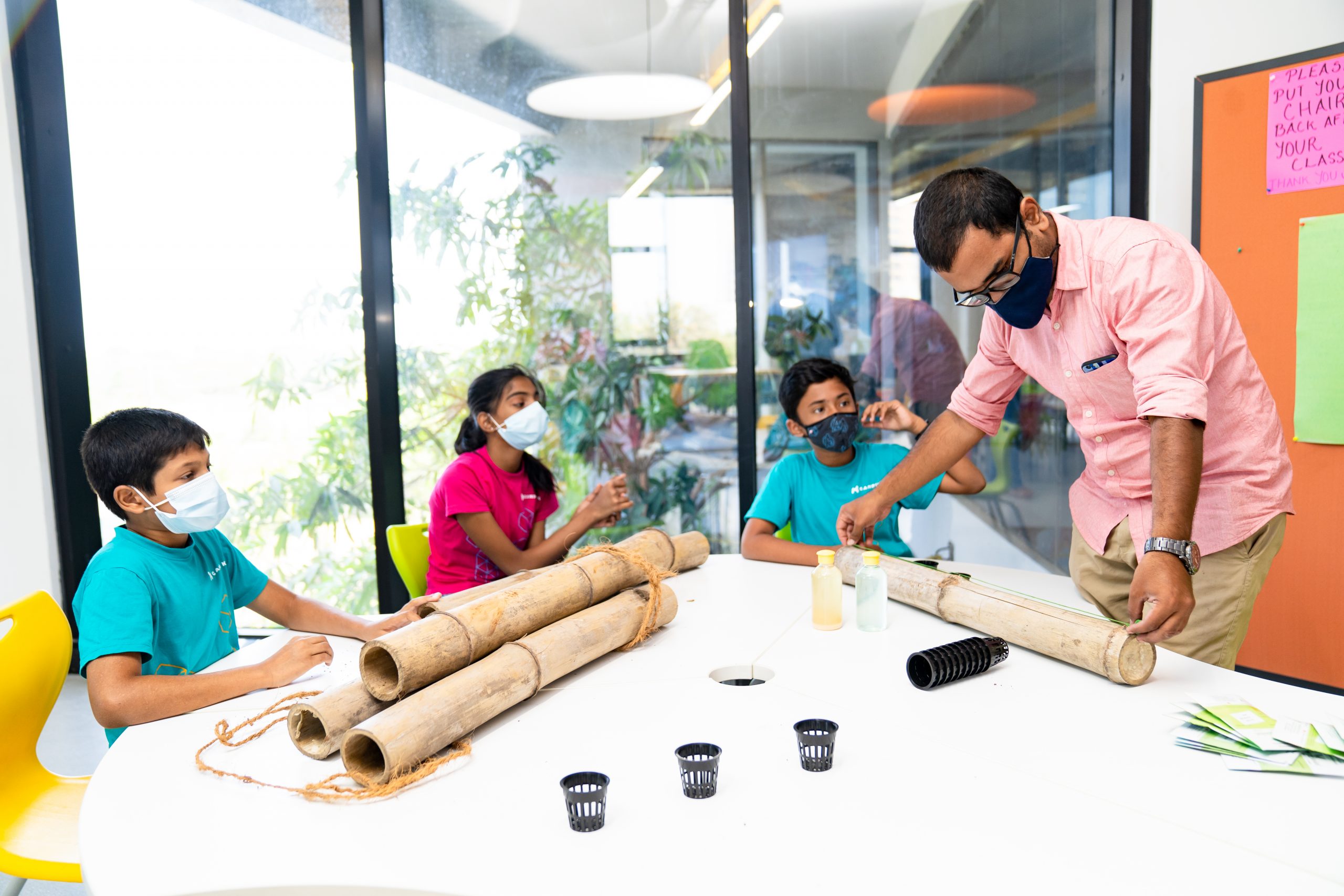
For major projects at Campus K, experts from relevant industries are invited to evaluate, mentor, or guide students.
This is not an occasional event. It is built directly into the learning structure.
Graphic Design
Students present to working designers.
Entrepreneurship
Projects are evaluated by founders and investors.
Film & Media
Creative work receives feedback from media professionals.
Scientific Research
Students present findings to academics and researchers.
These professionals are not invited to impress students. They are invited because they provide something teachers alone cannot:
The response of someone who lives and works in the exact domain the student is exploring.
What Changes When the Audience Is Real
The moment students know their work will be seen by a real professional, the quality of effort changes.
Students stop asking:
- “What is enough for marks?”
And begin asking:
- “Is this genuinely good work?”
This shift transforms learning.
Students Begin Producing Real Work
They revise more thoughtfully, question assumptions, refine ideas, and take ownership over outcomes.
Professional feedback is also fundamentally different from academic feedback.
A designer does not simply ask whether a learning objective was met. They ask whether the design communicates effectively, whether decisions are coherent, and what would improve the final outcome in the real world.
Internships and Real World Exposure
For senior students, this connection to industry extends beyond project evaluation into internships and long-term mentorship.
Students interested in:
Fashion Design
Work alongside professional designers.
Robotics
Learn directly from engineers.
Entrepreneurship
Interact with founders building real businesses.
Media & Film
Receive professional creative mentorship.
Through the Career Lab programme, students gain real-world clarity before choosing their IGCSE subject pathways.
They make decisions based on lived exposure rather than assumptions or social pressure.
What This Produces in a Graduate
A Campus K student graduates with something most school leavers do not have:
- Real-world confidence
- Experience presenting ideas professionally
- Clarity about career interests
- Comfort receiving substantive feedback
- The ability to think independently
This is the difference between preparing students for the world and helping them already begin to inhabit it.
Why This Matters for IGCSE Students
The Cambridge IGCSE rewards students who can:
- Think independently
- Communicate clearly
- Analyse unfamiliar problems
- Apply ideas creatively
These are exactly the qualities strengthened when students regularly engage with real professionals and real audiences.
Students who have spent years presenting their thinking publicly enter examinations with intellectual confidence that rote preparation alone cannot build.
Campus K integrates real-world thinking into the structure of school itself — not as an extra activity, but as part of everyday learning.
See Project Learning in Action
Visit Campus K to experience how students interact with real professionals, real projects, and real-world feedback from an early age.